

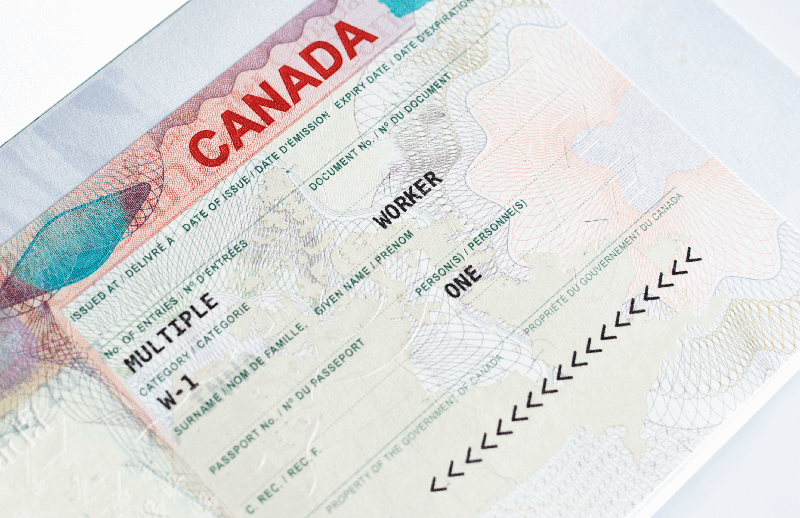
The Canada work permit is a document that allows foreign nationals to work in Canada for a specified period of time. Each year, the Government of Canada grants more than 500,00 work permits to temporary foreign workers from around the globe.
Before applying for a Canada work permit, our team of qualified lawyers at Total Law can assist you in ensuring that everything is in order. To get started, contact us now on 03301 222 991.
A work permit is required for most foreign nationals who want to work in Canada, with some exceptions. A job offer from a Canadian employer is usually needed to apply for a work permit unless the foreign worker falls into a category that does not require an LMIA or job offer. These categories can include recent graduates of a Canadian Designated Learning Institute or the spouse of someone already working or studying in Canada on a valid permit.
Candidates who wish to apply for a work permit must fulfil the following criteria:
Overview
The type of Canadian work permit a foreign national may apply for will depend on several factors, such as the intended occupation, length of time needed to work in Canada and whether an LMIA is required.
There are a few different ways to get a work permit in Canada. You might need a job offer from a Canadian employer, or an employer might need to provide a Labour Market Impact Assessment. Or, you might just need some kind of connection to Canada, like previous education or spousal sponsorship.
To understand what work permit you need, please look at the following categories:
These work permits require a positive LMIA from Employment. An LMIA is a document that a Canadian employer may need to provide before employing a foreign employee. The purpose of the LMIA is to ensure that there is a valid need for a foreign worker in the specific job and that no qualified Canadian worker is available to do the job.
Temporary Foreign Worker Program (TFWP)
The TFWP allows employers in Canada to hire foreign nationals to fill labour shortages. IRCC (Refugees and Citizenship Canada) and ESDC (Employment and Social Development Canada) jointly operate the program.
The TFWP program also ensures that these overseas workers are given the rights and protections required to work lawfully in Canada. Employers may employ temporary foreign workers through the following categories under the TFWP:
Facilitated LMIA (Quebec)
Quebec has a more simplified process for hiring foreign workers through the facilitated LMIA process. This is because the Canadian federal government has empowered Quebec with significantly more freedom than other provinces in their immigration procedures and policies. As a result, Quebec’s immigration policies are often treated differently from the other provinces. Consequently, the province has a few unique distinctions regarding hiring temporary foreign workers. Namely, Quebec makes it easier to hire foreign workers through the facilitated LMIA process.
An application for an LMIA must showcase proof that the Canadian employer has already published an advertisement against the job to Canadian citizens and made sufficient efforts to hire a local for the post. The facilitated Labour Market Impact Assessment system enables Quebec companies to apply without submitting this evidence.
Global Talent Stream
The Global Talent Stream (GTS) program helps Canadian employers employ highly-skilled people worldwide. The program enables employers to expedite hiring international talents through the Global Skills Strategy. The program was established in June 2017 through a collaboration between IRCC and ESDC.
The GTS program is designed to attract highly-skilled talent globally, promoting Canada’s economic growth. The program has two categories: Category A and Category B. These two categories have distinct needs but share certain GTS requirements.
Obtaining a work permit in Canada can be complicated and time-consuming. Fortunately, there are many ways to speed up the process by becoming LMIA-exempt.
International Mobility Program (IMP)
The IMP is a work permit program that applies to certain highly skilled workers. If you qualify under the IMP, you may be able to obtain a work permit without an LMIA.
The following conditions justify these LMIA exemptions:
A Canadian business must follow three steps to employ a foreign worker through the IMP:
NAFTA Work Permits
The North American Free Trade Agreement (NAFTA) is a trade agreement between Canada, the United States, and Mexico. The agreement makes obtaining certain work permits easier for citizens of these countries.
For a Canadian employer to hire a NAFTA (now known as USMCA) professional from the U.S. or Mexico, they must fall into any of the four situations:
CETA Work Permits
The Comprehensive Economic and Trade Agreement (CETA) is a free trade agreement between Canada and the European Union. The agreement creates opportunities for European companies to set up operations in Canada and vice versa.
CETA also makes it easier for highly skilled European workers to work in Canada. If you are a citizen of an EU country, you may be eligible for a work permit under CETA’s International Mobility Program without the requirement for an LMIA.
There are four situations where an EU citizen may be able to get work authorization in Canada:
Intra-Company Transfers (ICT)
An intra-company transfer is when an employee of a multinational company is transferred to the company’s Canadian branch. The employee must have worked for the company for a minimum of one year in the last three years before being eligible for the transfer.
There are certain conditions both the employee and employer must meet to qualify for an ICT work permit. An LMIA is not required for an intra-company transfer under NAFTA.
A few types of work permits don’t require an LMIA or job offer. These are called Open Work Permits, letting you work for any employer in Canada or be self-employed. If you’re a student, some types of work permits don’t require an LMIA.
Post-Graduation Work Permits (PGWP)
If you graduate from a designated Canadian college or university (Canadian program of study), you may be qualified for a PGWP (Post-Graduation Work Permit). With this work permit, you can stay and work in Canada after graduation for three years.
The Post-Graduation Work Permit (PGWP) does not require a foreign national to obtain a Labour Market Impact Assessment (LMIA). Instead, the PGWP allows eligible graduates from certain programs to gain Canadian work knowledge. With adequate work experience, many foreigners become eligible permanent residents in Canada.
Sponsorship from SPOUSE Inside of Canada
If your spouse is employed or studying in Canada, you may be eligible for an open work permit if they sponsor you. You may also be eligible for this type of work permit if you have applied for permanent residence from within Canada and are waiting for a decision on your application.
The application process for this work permit varies depending on whether you are applying from inside or outside Canada. However, this open work permit does not require an LMIA.
International Experience Canada (IEC) (working holiday visa)
IEC is a program that enables young people from certain countries to come to Canada and work temporarily. If you successfully enter the IEC program, you can apply for a temporary resident visa without needing an LMIA. This permit allows you to stay in Canada for up to one year.
The IEC program operates through a randomized draw system. Not all foreign nationals who submit an expression of interest will be selected for the program. The chance of success for being selected depends on the quota for each program and country.
There are three separate programs within IEC, each with unique requirements that can result in different work authorisation forms. Applicants should verify the requirements for the program they are interested in before applying.
Bridging Open Work Permit (BOWP)
If you are a foreign national and already working in Canada, the Bridging Open Work Permit (BOWP) will enable you to extend your status while waiting for a decision regarding your permanent residency application. BOWP is only available if you have submitted a PR application and currently possess a valid work permit. If successful, an open work permit will be granted, allowing the holder to work for multiple employers across different locations of their choice.
The processing fee is CAD 155, and the BOWP fee is CAD 100, making it a total of CAD 255. Open work permits for foreign workers in Canada typically allow the holder to work for any employer, with some locations being off-limits to certain applicants.
Spouse Accompanying International Student or Worker
If you’re married and/or have kids, you may want to bring them to Canada when you come to study. Including your family members in your study permit application may influence the visa officer’s decision, but they will still be considered.
A study permit allows someone to study in Canada temporarily. In some cases, if a student plans to bring their family with them, the visa officer might think that the student doesn’t really plan to leave Canada after their studies. This could affect the decision of whether or not to issue the study permit.
The documents required to apply for a work permit will depend on the type of work permit you would like to apply for. The common documents required are:
The time it takes to process a work permit application varies depending on the type of work permit you are applying for and your country of citizenship. The processing time may also differ if you apply online or by paper. The typical processing time is a few weeks, but it can sometimes take a couple of months.
A labour market impact assessment (LMIA) application can be a regular LMIA or a simplified LMIA. Only Quebec has the simplified LMIA, while the regular one takes various shapes and sizes. With processing times ranging from person to person, the regular LMIAs procedure is done on a case-by-case basis. It generally takes at least five months for an answer on a normal LMIA application.
A police clearance certificate may be required as part of the application process for a Canadian work permit. This document certifies that the applicant does not have a criminal record and is, therefore, eligible to work in Canada.
Police clearances may be required from any country where the applicant has lived for 6 months or more past 18. This requirement aims to ensure that those granted a work permit pose no threat to the safety and security of Canadian citizens
Depending on their intended length of stay and occupation, foreign nationals who apply to work in Canada may need to take a medical exam. If they only plan to work in Canada for less than six months, they may not need an exam, with some exceptions. Exceptions, where a medical exam may be required, include jobs that involve close contact with people.
Applicants are welcome to submit their medical examination results upfront. This entails directly contacting the panel physician and taking the exam before submitting an application. If you do not provide your medical examination findings with your application, the IRCC officer will send instructions on how to complete it and when it must be finished.
A passport-sized photograph is required when applying for a work permit from the Government of Canada. The photo must be in IRCC’s guidelines.
Extension of work permit
If you want to extend your work permit, you should apply online. Applying at least 30 days before your current permit expires is recommended, but you technically have until the last day of expiration.
There are several reasons why an application for a work permit may be refused. The most common reason is that the applicant does not meet the eligibility requirements. Other reasons include:
Visa Immigration Services & Appeals can help you with all aspects of your work permit application, from start to finish. We can assess your eligibility, help you gather the required documents, and submit your application on your behalf.
We know the program inside out and can help you navigate it. Our Canadian immigration lawyers are trained in the country’s visa and emigration processes. We’ve helped several clients and firms obtain work permits by assisting them with their paperwork.
For any questions or concerns regarding the Canadian work permit, please contact us at 03301 222 991. Alternatively, you can fill out our online contact form.